
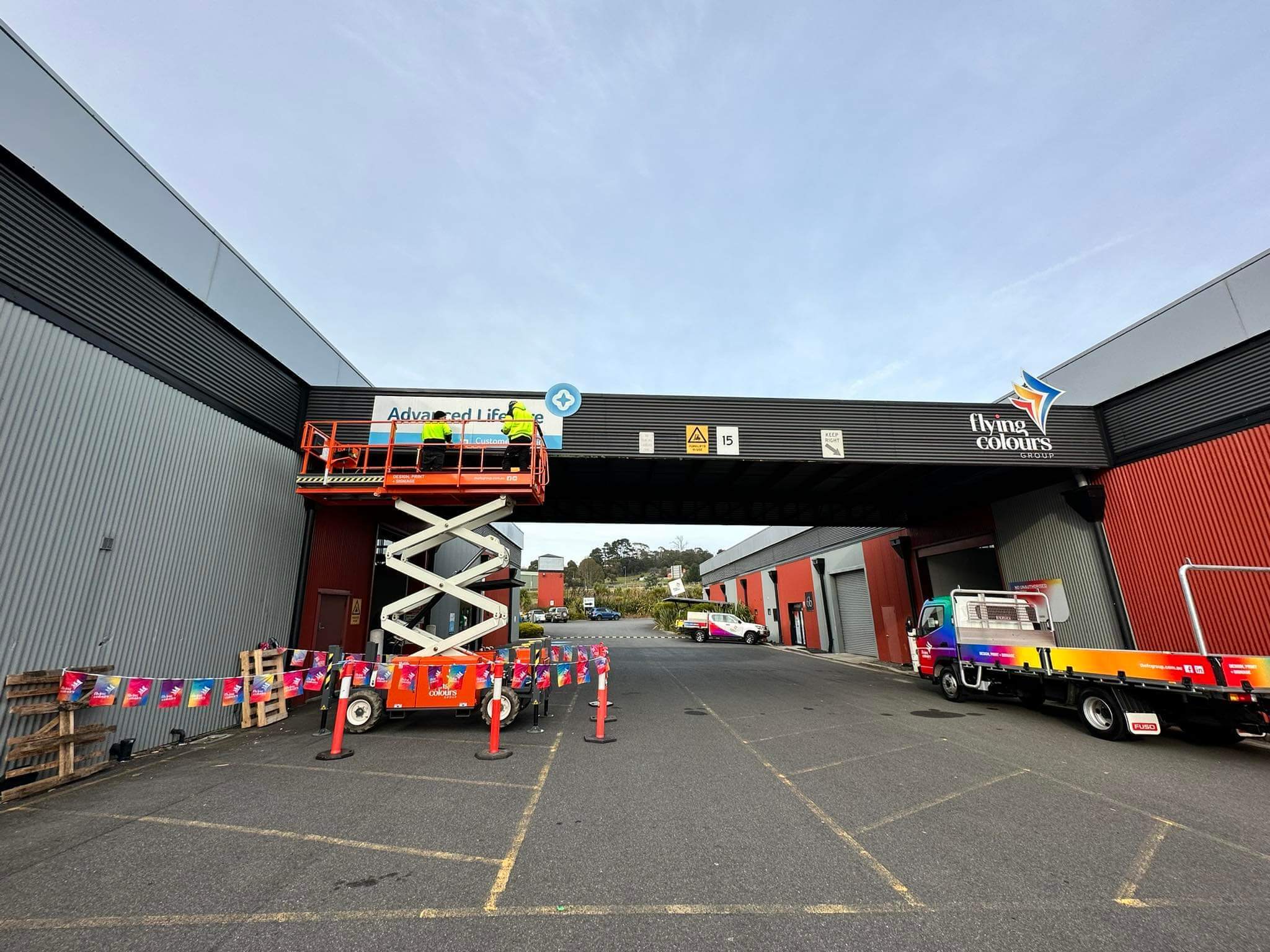
What Current Supply Chain Changes Mean for Print & Signage Projects in Tasmania
Over the past few years, businesses across Australia have experienced ongoing changes in freight, fuel, and global supply chains. While many industries have adapted to the initial disruption caused during COVID, recent international events and continued pressure on shipping and logistics networks are creating a new wave of challenges across the print, signage, and visual communications industry.
For Tasmanian businesses planning signage projects, commercial printing, branding rollouts, events, fit-outs, or installations, understanding these changes early can help avoid unnecessary delays, increased costs, and last-minute project pressure.
At Flying Colours Group, we believe proactive planning and clear communication are more important than ever.
What’s Happening Across the Print & Signage Industry?
Across Australia, suppliers and manufacturers are continuing to experience pressure from:
- Rising freight and fuel costs
- International shipping delays
- Congestion through major shipping routes and ports
- Increased costs for raw materials and energy
- Extended lead times on some paper, substrates, and imported materials
While there is currently no immediate concern around overall supply availability, lead times and pricing are becoming less predictable across the industry.
This is particularly relevant for businesses managing:
- Commercial signage projects
- Retail rollouts
- Construction and development projects
- Event signage and displays
- Large format printing
- Packaging and printed collateral
- Multi-site branding programs
In many cases, projects that were once achievable within very short turnaround times now require additional planning and coordination to ensure smooth delivery.
What This Means for Tasmanian Businesses
Tasmania already presents unique logistics considerations compared to mainland Australia, particularly when it comes to freight, shipping schedules, and installation coordination.
As freight and fuel costs continue to rise nationally, Tasmanian businesses may notice:
- Longer lead times for some print and signage materials
- Increased delivery and freight costs
- More pressure on urgent production schedules
- Reduced flexibility around last-minute changes
- Greater importance on forward planning and forecasting
For businesses operating across multiple sites or managing large projects, early engagement with suppliers is becoming increasingly valuable.
Planning ahead allows greater flexibility around production scheduling, material sourcing, freight coordination, and installation timing, ultimately helping projects run more efficiently and cost-effectively.
How Flying Colours Group Is Responding
At Flying Colours Group, we are proactively working to minimise disruption and continue delivering reliable outcomes for businesses across Tasmania.
Our team is actively focusing on:
- Supplier & Freight Collaboration
We continue to work closely with suppliers, freight partners, and manufacturers to maintain strong communication around lead times, stock availability, and delivery schedules. - Operational Efficiency
We are continually reviewing workflows, scheduling, logistics, and production processes to improve efficiency and reduce unnecessary delays or costs wherever possible. - Smarter Project Planning
By encouraging earlier planning conversations with clients, we can better forecast upcoming work, secure materials earlier, and coordinate production and installation timelines more effectively. - Workflow Automation & Systems
As part of our ongoing commitment to continuous improvement, Flying Colours Group is also exploring further automation and workflow optimisation opportunities to improve visibility, responsiveness, and project delivery across both print and signage operations. - End-to-End Project Support
With in-house design, print, signage production, fabrication, and installation capabilities, Flying Colours Group is well positioned to help businesses manage projects from concept through to completion with greater control and consistency.
How Businesses Can Reduce Delays & Cost Pressure
While global supply chain conditions are outside any one business’s control, there are several practical ways businesses can help minimise disruption to upcoming print and signage projects.
- Plan Earlier Where Possible
Providing additional lead time allows greater flexibility around sourcing materials, scheduling production, and coordinating installations. - Discuss Upcoming Projects Early
Even early-stage planning conversations can help identify potential timing or material considerations before they become challenges. - Consolidate Projects & Deliveries
Combining projects, deliveries, or installations where possible can improve efficiency and help reduce freight and operational costs. - Allow Flexibility Around Timing
Where practical, avoiding urgent last-minute turnaround requirements can significantly improve efficiency and project outcomes. - Partner With Experienced Suppliers
Working with experienced print and signage providers who understand project management, logistics, and production planning can help businesses navigate changing conditions more smoothly.
Looking Ahead
While the print and signage industry continues to face evolving freight and supply chain conditions, businesses that plan proactively and communicate early will be best positioned moving forward.
At Flying Colours Group, we remain committed to helping Tasmanian businesses deliver projects successfully through practical advice, proactive planning, and reliable end-to-end service.
If you have an upcoming signage, print, branding, or installation project you’d like to discuss, our team would be happy to help you plan ahead and explore the best approach for your business.
